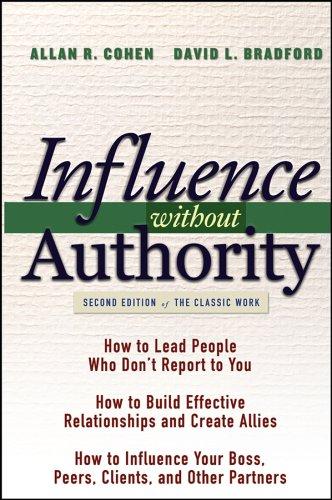
Review
Product management is a job defined by responsibility without command, so a book with this title is either going to be extremely useful or a pile of platitudes about building relationships. This one is mostly the first.
Its model is transactional in a way that initially put me off and then won me over. You get things done by exchanging something the other person values for something you need, and the work is figuring out what they actually value rather than what you assume they should. That sounds cynical until you notice the alternative, which is expecting people to help because your priority is objectively important, and that has never once worked.
The most practical section is on diagnosing the other person's world: their pressures, how they're measured, what makes them look competent to their own boss. Almost every stalled cross-functional initiative I've been part of comes down to someone's incentives quietly pointing elsewhere, and nobody having asked.
It's longer than it needs to be, and the corporate case studies feel dated. But the core is sound and it's the rare leadership book that treats influence as a skill you can practise rather than a personality you either have or don't.
Key Takeaways
The parts worth keeping:
Influence is exchange
- People cooperate when they get something they value. The currency is rarely money; it's more often information, visibility, resources, gratitude, or being spared a problem.
- Assuming your priority is self-evidently important is the most common failure. It's important to you because of what you're measured on.
- The reciprocity is real but not immediate. A ledger kept too explicitly stops working; one never kept at all runs dry.
Know the other person's world
| Ask | Because |
|---|---|
| What are they measured on? | It predicts what they will and will not spend effort on |
| What pressure are they under? | A no is often about capacity, not disagreement |
| What makes them look good upward? | That is the currency you can actually offer |
| What have they been burned by? | Resistance is frequently memory rather than opinion |
When it isn't working
- If someone keeps declining, the usual cause is that you're offering something they don't want, not that they haven't understood you. Repeating the request louder addresses the wrong problem.
- Relationships you only contact when you need something deplete fast. The deposits have to happen before the withdrawal.
- Some situations genuinely have no exchange available. Recognising those early saves months of pushing.
The uncomfortable implication
- Being right is an input, not a mechanism. The organisation does not have a process that converts correctness into action, and expecting one is the source of a great deal of product-manager frustration.