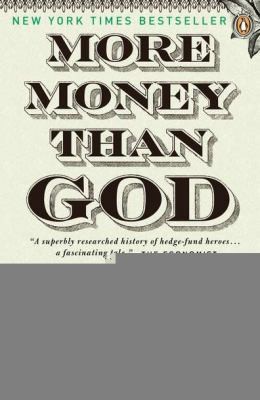
Review
A history of hedge funds, read mostly out of curiosity about how people who are paid entirely on results actually think about risk.
Mallaby structures it around individual funds and the specific insight each one exploited, which works well because it shows that most of the famous returns came from noticing one structural thing before anyone else, then riding it until the advantage disappeared. The edge is always temporary and the good operators know it.
The part that transfers beyond finance is how differently these people treat being wrong. Position sizing, cutting losses fast, and separating a bad outcome from a bad decision are all habits that would improve most product organisations, where a failed launch is usually treated as evidence of a bad idea rather than an expected result of a portfolio approach.
It is long, and there is a stretch in the middle where one more fund is described in one more crisis and the pattern stops adding. The financial detail is handled clearly enough that you don't need a background in it. Read it for the thinking about uncertainty rather than for the history, though the history is good.
Key Takeaways
The parts worth keeping:
An edge is temporary by construction
- Most large returns came from spotting one structural inefficiency early. Once enough capital noticed, the advantage disappeared.
- Nobody in the book got rich from a permanent insight. They got rich from being early and then finding the next thing.
- The implication is uncomfortable: a strategy that is working is already on a clock.
Separate the decision from the outcome
- A good decision can lose and a bad one can win. Judging by results alone teaches the wrong lesson roughly half the time.
- The consistent operators evaluated their process, not the individual result, which is exactly what most organisations do not do after a launch.
Sizing matters more than picking
- How much you commit to a position matters more than being right about it, because a large enough wrong bet removes you from the game entirely.
- Surviving to keep playing is the precondition for everything else, and it is the part that looks like timidity from outside.
Read it with the survivors in mind
- The funds that failed are not profiled, and their strategies frequently looked identical to the ones that worked right up until they did not.
- Skill and luck are extremely hard to separate over short records, and most records are short.