Review
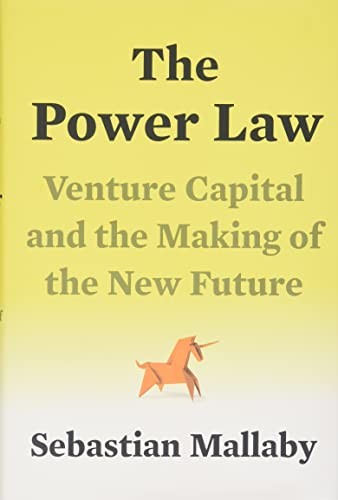
I picked this up wanting to understand how venture capital actually decides things, having spent enough time near funded companies to notice the logic was not the one being described out loud.
The central idea is in the title and it reorganises everything else. Returns are not distributed evenly or even lopsidedly, they're distributed such that one investment in a portfolio can return the entire fund and most of the rest return nothing. Once you accept that, behaviour that looks reckless from the outside becomes rational. A fund that avoids losses is optimising for the wrong tail.
The history is genuinely good, from the early Californian partnerships through to the recent megafunds, and Mallaby is a real journalist rather than a cheerleader. He's willing to say when the returns came from luck, structural advantage, or being the only cheque available.
My caveat is that it's a history, not a manual. If you're a product person hoping to learn how to raise money, this explains the incentives of the people across the table, which is useful, but it won't tell you what to put in the deck. Read it to understand why investors behave the way they do, and be honest that the same power law makes most of the advice in it unrepeatable.
Key Takeaways
The parts worth keeping:
The distribution is the whole point
- Venture returns follow a power law. A small number of investments produce nearly all of the gains, and the median investment is worth roughly nothing.
- This inverts normal risk management. Avoiding failures is not the goal, because a portfolio with no total losses has probably also excluded the one outcome that pays for everything.
- The question shifts from how likely is this to work to how large is it if it does. A high chance of a modest outcome is the wrong shape.
Why investors behave the way they do
- Their interest in enormous markets is not fashion, it is arithmetic. A company that cannot become very large cannot return a fund, however sound it is.
- Pressure to grow faster than feels comfortable comes from the same place. A business that grows steadily and profitably is a good business and a poor venture outcome.
- Understanding this makes it easier to tell when an investor is wrong about your company and when they're simply playing a game your company does not fit.
The craft underneath
- Much of the value added historically came from active involvement: recruiting, replacing founders, brokering deals. Capital was the least differentiated part.
- Access to good opportunities compounds. Firms with a reputation for backing winners see better opportunities, which produces more winners.
- Later waves of capital changed the mechanics considerably. Larger funds and faster deployment reward different behaviour than the small partnerships that built the model.
Read it with scepticism
- Survivorship shapes every account of venture success, including this one. The firms that failed are not around to be profiled.
- The book is better on what happened than on what to do, and it's honest enough not to pretend otherwise.