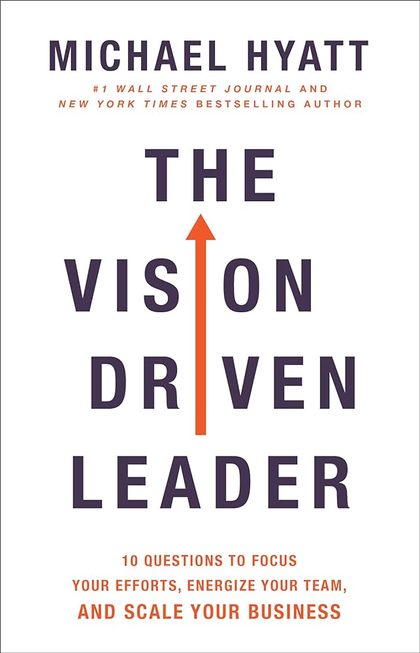
Review
I came to this expecting something approaching a strategy book and left with something much narrower. Hyatt is focused almost entirely on vision: what it is, the attributes of a good one, how to pitch it, and how to protect it when it meets resistance. That's a coherent and useful thing to write about, but it's not strategy. The frameworks are clear, and the mission-versus-vision breakdown in particular earns its place. But if you read this hoping to sharpen how you think about strategy, you will need to go further. This is an entry point, not a destination.
Key Takeaways
The parts worth keeping
The leader vs manager distinction
Vision is the thing that separates a leader from a manager. Hyatt makes the distinction clean:
| Leaders | Managers |
|---|---|
| Create the vision | Execute a vision |
| Inspire and motivate | Maintain and administer |
| Take risks | Control risk |
| Focus on the horizon | Focus on short-term objectives |
Mission, Vision, Strategy, Values
The four concepts are defined separately and the distinction matters:
- Mission: who you are
- Vision: where you're going
- Strategy: how you're going to get there
- Values: the kind of people you're along the way
Mission operates in the present; vision lives in the future. The table version of that:
| Mission | Vision |
|---|---|
| What a business is | Where a business is going |
| Now | Next |
| What | Where |
| Here | Out there |
| Brief | Robust |
A good mission answers four questions: who are we, who do we serve, what problem do we solve, and what transformation do we deliver. Effective mission statements are focused, memorable, and short (two sentences at most).
What makes a vision effective
A good vision is clear, inspiring, practical, attractive, and 3 to 5 years out. It focuses on the what, not the how, and it's concrete enough that people know when they have arrived. Ford's is Hyatt's example:
"A car for every household... so low in price no man making a good salary would be unable to own one and enjoy with his family in God's great open spaces"
Operating without a strong vision carries six specific costs:
- Unpreparedness for the future
- Missed opportunities
- Scattered priorities
- Strategic missteps
- Wasted money, time and talent
- Premature exits
From vision to daily work
There should be a through line from the vision to the daily task list. The cascade:
- Vision (3-5 years)
- Annual plan: what you will do this year to make progress, including which projects to start or stop
- 3 Quarterly Goals
- Weekly Objectives
- Daily Tasks
The visibility problem: if your team doesn't know the vision, they can't realize it. Communicating the vision isn't a one-time event.
Selling and protecting the vision
The real test of a vision is whether you can sell it across the organization: to your team, to leadership, to the rest of the company, and eventually outside it. When pitching internally:
- Respect the past: acknowledge how they won before, then explain what is different now
- Understand your audience and anticipate their objections before you're in the room
- Think through the presentation before you make it
There are no friction-free visions. The traits that carry leaders through resistance: tenacity, integrity, courage.
When to revisit the vision
Visions have a shelf life. The book suggests reviewing as the organization moves through stages: startup, rising, transitioning, mature, legacy, zombie, dead. The vision that got you through the startup phase probably shouldn't be the one guiding a mature business.