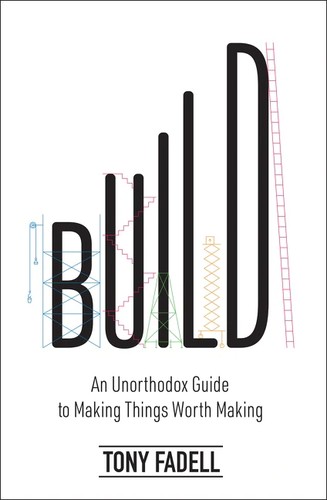
Review
I read this expecting a Nest post-mortem and got something more useful: a book about the unglamorous middle of building things. Fadell is strongest on the parts most product books skip, like why a first version has to be opinionated to the point of discomfort, and why the second product is harder than the first.
The memoir chapters are the weakest part. There is a stretch on Apple politics that reads like score-settling, and it doesn't transfer to anyone who wasn't in that room.
What stuck was his insistence that the story you tell about a product isn't marketing wrapped around the thing. It is the thing. If you can't explain why it should exist before you explain what it does, you're not ready to build it. That reframed how I brief teams on positioning.
Worth reading if you work on hardware, or on anything with a long feedback loop where you can't ship your way out of a bad premise. Skip the middle third if you're short on time.
Key Takeaways
The parts worth keeping:
Why before what
- Every product needs a story explaining why it should exist, and that story has to hold up before a single feature is specified. If the why is weak, no amount of execution rescues it.
- The story isn't the launch copy. It's the reason the thing exists, and it should be legible to the team long before it reaches a customer.
- Analogies do the heavy lifting. The point is to connect something unfamiliar to something the listener already understands, not to be clever.
Painkillers beat vitamins
Fadell splits products into two kinds, and the distinction decides how hard the sell will be.
| Type | What it does | What it costs you |
|---|---|---|
| Painkiller | Removes a problem the customer already feels and can name | Less explaining, faster adoption, clearer pricing |
| Vitamin | Improves something the customer wasn't complaining about | You fund the education, and the habit forms slowly if at all |
- Vitamins can work, but you should know you've chosen one, because the go-to-market cost is completely different.
The first version has to have a point of view
- A v1 that tries to satisfy everyone satisfies nobody. Pick the customer you're for, and accept the ones you're losing.
- Ship when the thing is coherent, not when it's complete. Coherence is what people respond to; completeness is what committees ask for.
- The second generation is where the real work is. The first proves the idea; the second proves you understood why it worked.
Teams and the people problem
- Fadell separates people committed to the mission from people renting their time to it. Both can be competent. Only one type stays when the schedule slips.
- Managing is a different job from doing, and being good at the second isn't evidence you'll be good at the first. Most of the pain he describes comes from people who never made that switch deliberately.
- Hire for the problem you'll have in eighteen months, but not so far ahead that nobody can do the work in front of them.