Review
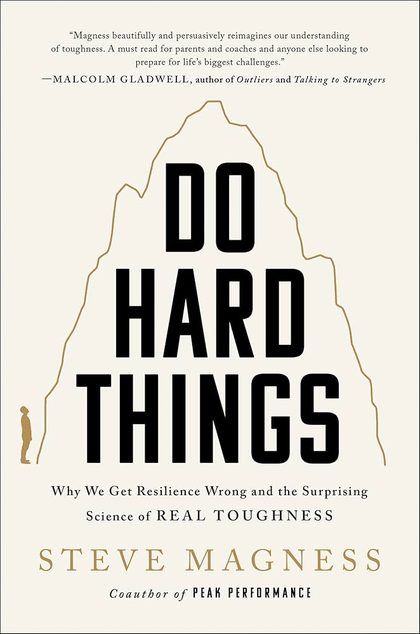
I picked this up in the summer of 2023 expecting a motivational framework. Something about grit metrics, cold-exposure protocols, and a chapter on Navy SEALs. Instead, Steve Magness spends three hundred pages dismantling the performance of toughness and replacing it with something more precise.
The central argument is harder to dismiss than it looks: the traditional model (push through, show no weakness, project control) is a facade, and facades fail under actual pressure. What holds up is the space between the experience and the response. Not the elimination of discomfort. Navigation of it.
The book earns its research base without becoming a literature review. Magness is a performance coach, and the advice is concrete rather than inspirational. I found myself underlining things that translated directly to high-pressure product decisions, not just the athletic training examples the framing suggests.
My one caveat: the four-part structure is useful but occasionally over-classified. Some of the insights across the sections shade into the same underlying idea. I would have cut one part and gone deeper on two. Worth reading regardless.
Key Takeaways
The parts worth keeping:
What the macho version of toughness gets wrong
- The traditional model (push through, show no weakness, never stop) produces a performance of toughness, not the real thing. When external conditions push past what you can actually handle, the facade collapses.
- The better definition: experience discomfort, pay attention to it, and create enough space to take the best action available. Toughness is in the navigation, not the elimination.
- Real toughness means replacing control with autonomy, appearance with substance, rigidity with adaptability, fear-based motivation with inner drive, and insecurity with quiet confidence.
- Confidence built on false premises breaks under pressure. Real confidence comes from honest work, knowing your actual floor, and having an accurate picture of what you're capable of.
- An honest appraisal of yourself and the situation is what enables a productive stress response. Five strategies to nudge yourself toward accuracy: set goals slightly beyond current ability to maintain motivation; choose goals that reflect your true self for better follow-through; focus on process goals rather than outcomes; learn to navigate stress by adjusting expectations and actions; shift focus from threats to opportunities.
Reading yourself accurately under pressure
- Your body uses feelings and sensations to communicate internal status. The function of feelings is to update you on your condition and point you toward a possible solution. They are data, not obstacles.
- The better you can read and distinguish internal signals, the better you can use feelings as information to guide your actions, rather than missing the signal entirely or jumping straight from feeling to reaction.
- Self-esteem grounded in reality is useful. Self-esteem built on external validation and unearned praise is fragile: it outsources your resilience to the approval of others.
- Four steps toward inner confidence: raise your floor (lower the bar enough that a reliable baseline is achievable regardless of circumstances); shed perfectionism for an honest picture of your actual capabilities; trust your training over your anxiety about the outcome; develop a quiet ego, one that's aware of its strengths and weaknesses without needing to defend them.
- Three tactics for winning the inner debate: verbalize thoughts occasionally, because a stubborn internal voice sometimes needs to hear itself spoken; work harder to reduce negative self-talk than to inflate positive self-talk; use second or third person in your inner dialogue to create distance from the emotion and regain perspective under stress.
The gap between stimulus and response
- Toughness isn't about what you feel. It's about what happens between the feeling and the action. Meditators don't distract from discomfort; they face it, suppress the exaggeration, and regulate the response. The gap between perception and reality narrows.
- Affective inertia: negative emotions compound. A negative thought increases reactivity and extends the recovery tail. The practice is to notice without amplifying.
- Treat exhaustion as feedback, not as a sentence. Ask what it's telling you about your condition right now.
- Practice sitting with discomfort regularly. Feel the urge to quit or react without immediately acting on it. The skill is creating space, and it's built precisely in the moments when it's hardest to do.
- Six tools to interrupt a spiral: shift visual focus from narrow to wide; move from detail to big picture cognitively; alter posture (leaning forward narrows focus, reclining broadens it); imagine how you will feel about this situation in the future to restore perspective; switch from first to third person in your internal dialogue; change your physical environment to change your mental state.
Autonomy as the mechanism for building toughness
- How much control you perceive you have directly changes how your body handles stress. When you lack control, cortisol spikes. When you have even a small sense of influence over the situation, the stress response dampens. The mechanism is choice.
- Four exercises to develop perceived control: start with the smallest manageable action related to the problem and build from there; allow yourself a mulligan when building habits (all-or-nothing usually delivers nothing); name the fear directly rather than circling it; adopt a ritual to establish order and focus on behaviors you can actually control.
- Self-determination theory identifies three conditions for genuine resilience: autonomy, competence, and relatedness. Autonomy-supportive environments guide rather than dictate. Environments that suppress these needs produce compliance, not toughness.
- Controlling leaders produce dependent people. Toughness in others comes from being supported and from having real room to fail. Set the constraints, then step back. Coach toward independence, not toward needing you.
- Your body warns before it actually runs out. The sensation of being at zero is a signal, not the truth. How close you push to the real limit depends on how much the outcome matters. Purpose is the fuel that makes the difference.