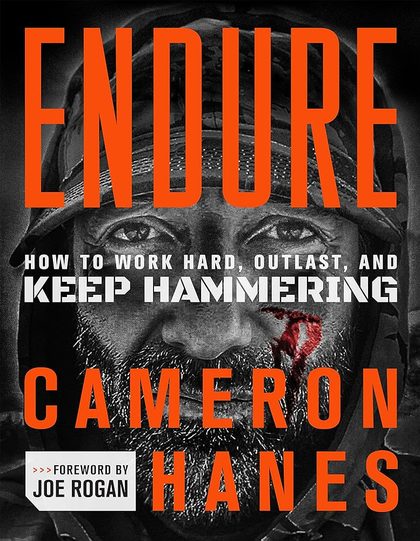
Review
I picked this up while I was already running every day and curious how far people actually take it. Cameron Hanes takes it further than most: a marathon daily, weightlifting, bowhunting, a full-time job, and no rest days on any of it. Not as a demonstration of willpower, but because bowhunting at the level he competes at demands exactly this kind of volume. That single-purpose framing is the most interesting thing in the book.
The philosophy is simple and he makes no effort to dress it up. Suffer more than anyone else. Do it every day. Never let yesterday count for anything. Two mantras carry the whole argument: Nobody cares, work harder. Keep hammering. There is no periodisation, no recovery protocol, no nuance about adaptation. The absence of nuance is the point.
What a product leader actually takes from this is smaller than the wordcount suggests. The message about time, that it is rarely the real constraint you think it is, is worth sitting with. The idea that relentless, consistent volume builds a form of credibility that talent alone cannot match is also real. But the philosophy runs on a single gear: more. Angela Duckworth's Grit asks more interesting questions about what sustains effort over years, and that is the better framework for work I actually do.
Read it if you want to be reminded that other people's excuses are not your ceiling. Skip it if you want a framework.
Key Takeaways
The parts worth keeping:
The core argument
- Weakness is the inability to take action. Solve for the mind first; the body follows.
- Two mantras carry everything: Nobody cares, work harder. Keep hammering.
- Be obsessed or be average. There is no middle state he considers worth occupying.
- The goal was always to find the limit of what is possible, then push past it.
Volume and consistency as the only edge
- He is not naturally talented. His secret is time; everything takes time to accumulate.
- No rest days, ever. Consistency is his only real competitive edge over more naturally gifted athletes.
- Do something every day for a year. That is how a work ethic compounds.
- The reps that count are the ones you do when you are exhausted. That is where separation happens.
- Everything, including the running and lifting, serves a single goal: being better at bowhunting. Single purpose gives extreme volume a reason to exist.
Pain as competitive strategy
- He has made friends with pain. Every meaningful challenge he has faced was painful. The friendship makes showing up easier.
- The ability to suffer more than others is what separates you. Not talent, not equipment.
- During an ultra marathon with a long visible uphill section, he sprinted it so he looked unbeatable, then recovered quietly afterward. Perception is part of the competition.
- Cry in training, laugh in battle. Make training harder than the event.
- Pain is temporary. Quitting lasts forever.
Focus and elimination
- He does not drink, golf, fish, play poker, or take vacations. Success is as much about what you stop doing as what you start.
- Go where others will not or cannot. Limiting the competition is a deliberate strategy, not a side effect.
- Small-town thinking is talking about what you will do tomorrow. Actions count; plans do not.
- His filter for new challenges: has anyone done this before? If yes, that is enough proof it is possible.
Accountability and environment
- Knowing Joe Rogan was watching online mattered to him. External accountability is real, even for someone this internally driven.
- When Arnold trained, everyone else in the room worked harder just from his presence. The bar raises without a word being said.
- Who you spend time with matters. Follow people who are obsessed, not people who are comfortable.
- Shared suffering builds real connection. Going through something hard with someone creates a bond ordinary time together does not.