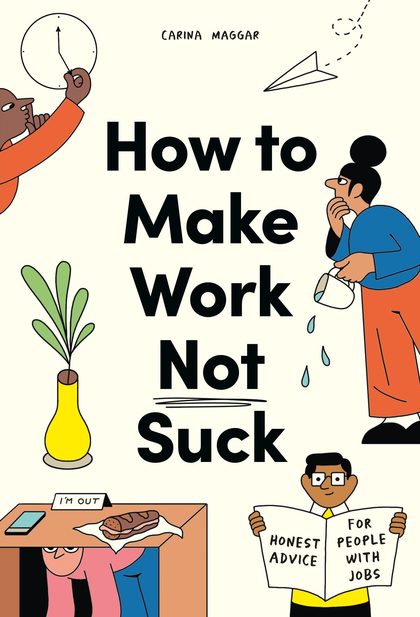
Review
A short, blunt book about work, written with the tone of a friend who has watched you complain about your job for a year and has decided to say something.
Its strength is refusing the two default positions. It doesn't tell you that work should be your passion, and it doesn't tell you to detach and collect a salary. The argument sits between: work occupies too much of your life to be miserable and it is not the whole of your life either, so treat it as something to be deliberately shaped rather than endured or worshipped.
The practical parts I liked most are about boundaries and about naming what you actually want from a job, which is usually more specific and more mundane than the aspirational version people give in interviews. It is honest that most improvement comes from small adjustments rather than dramatic exits.
The limitation is that it assumes a degree of choice. Advice about setting boundaries is easier to follow when you can afford to lose the job, and the book acknowledges this less than it should. It's also deliberately light, so if you want depth on organisational behaviour it is not the book. As an hour spent recalibrating expectations, it earns its place.
Key Takeaways
The parts worth keeping:
Reject both default positions
- The passion story sets an expectation almost no job can meet and makes ordinary dissatisfaction feel like personal failure.
- Full detachment is no better, because the hours are real whether or not you are invested in them.
- The workable position is treating work as something to shape deliberately, accepting it will be neither a calling nor nothing.
Be specific about what you want
- Most people describe what they want from work in aspirational language and then make decisions based on unstated concrete preferences: autonomy over hours, a short commute, a manager who leaves them alone.
- Naming the mundane version makes the next decision much easier, and it is usually more attainable than the aspirational one.
Boundaries are maintenance, not confrontation
- Boundaries hold through small consistent signals rather than one difficult conversation.
- What you tolerate becomes the expectation quickly, and unwinding it later is harder than setting it early.
Where the advice runs out
- Much of it assumes you could leave if you had to. That assumption does a lot of unacknowledged work.
- Some jobs are not improvable from the inside, and the honest answer there is a different job rather than a better attitude.