Review
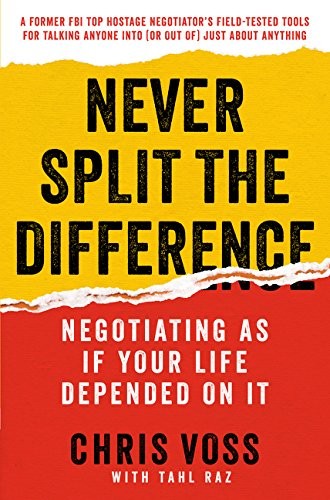
A former hostage negotiator writes a negotiation book, which is either going to be brilliant or an extended flex, and it's mostly the first with occasional flashes of the second.
The argument I found genuinely useful is that negotiation is not primarily an exchange of positions but an attempt to understand what the other side is actually optimising for, which is often not the thing they're asking for. The tactical listening techniques, repeating the last few words back, naming the emotion you think you're seeing, all sound faintly manipulative written down and work because they are just concentrated attention.
The calibrated question idea has had the most practical effect on my work. Replacing a request with a question about how the other person would solve your problem shifts them from defending a position to working on it. I use that in stakeholder conversations far more than in anything resembling a negotiation.
The hostage stories are compelling and also do a lot of rhetorical work, implying that techniques which succeed under extreme duress will transfer to a pricing discussion. Sometimes they do. The title advice, never split the difference, is also plainly wrong in plenty of ordinary situations where the relationship matters more than the last increment.
Key Takeaways
The parts worth keeping:
Find what they are actually optimising for
- The stated position is rarely the real interest. People ask for a specific thing because it is the solution they happened to think of.
- Most deadlock is two people defending solutions rather than discussing the problem either is trying to solve.
- The information advantage comes from listening, which is why talking less is a tactic rather than a courtesy.
Techniques that are really just attention
| Move | What it does |
|---|---|
| Repeat their last few words | Invites them to expand without you steering |
| Name the emotion you see | Defuses it, and corrects you fast if you are wrong |
| Calibrated questions | Turns your problem into a problem you solve together |
| Deliberate silence | The other person fills it, usually with information |
Yes is weaker than it looks
- Agreement is cheap and often given to end the discomfort of a conversation. It predicts very little about what happens next.
- A clear no early is more useful than a soft yes, because it tells you where the actual boundary is.
- The response you want is the moment someone says that is right about your summary of their position, which is different from agreeing with your proposal.
Where the book overreaches
- Hostage negotiation is a one-off encounter with a stranger. Most professional negotiation is with someone you will deal with again next month, which changes the calculus considerably.
- Splitting the difference is sometimes exactly right, particularly when the remaining gap is worth less than the goodwill spent closing it.