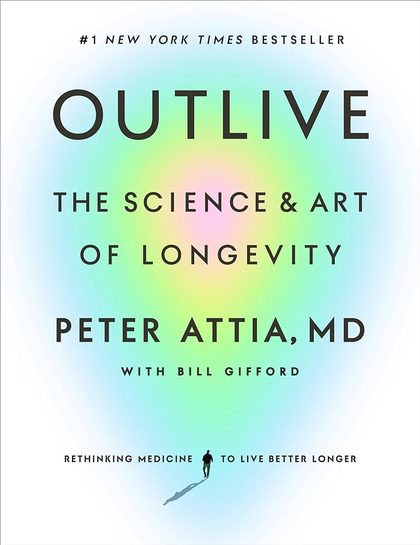
Review
I already exercise, track my nutrition, and sleep reasonably well. Outlive didn't create those habits. What it did was make me understand why each of them matters at a depth that changes how seriously I take the detail.
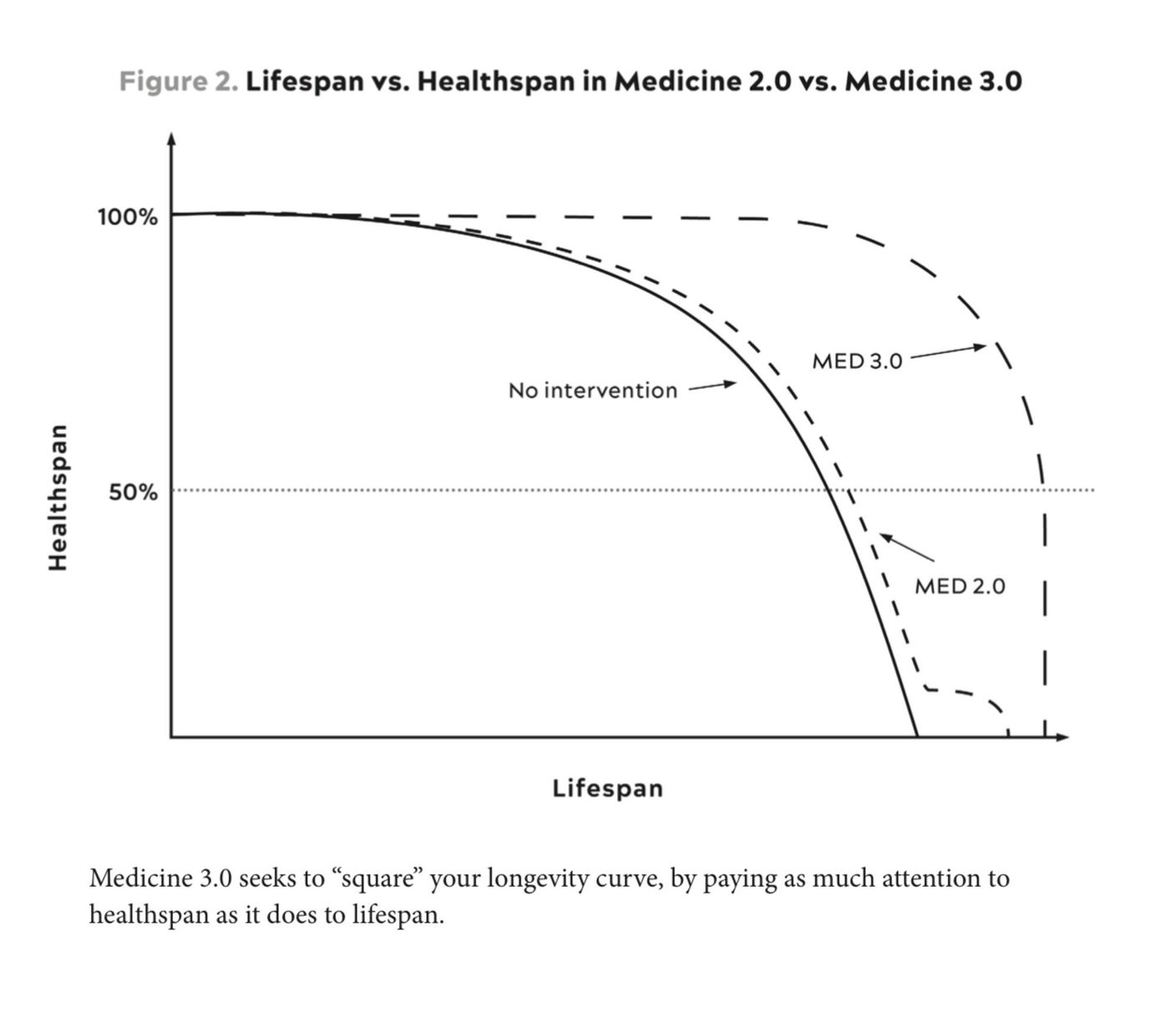
The central argument is that modern medicine is structured to respond to disease after it arrives, not to prevent it from arriving. Attia calls this the gap between Medicine 2.0 and Medicine 3.0. 2.0 waits for the crisis. 3.0 starts the work thirty years before the crisis is possible. That reframe is the book's most useful contribution, and it applies to how almost everyone thinks about their health.
The exercise chapter is where the book changed what I actually do. I already ran. I wasn't thinking much about zone 2 versus zone 5, or about VO2 max as a mortality predictor. After reading Attia's case for it, I restructured my training rather than just adding volume to it. The stability chapter did the same for how I warm up. Both were practical changes I could make immediately.
Some of the book stayed theory. The sleep chapter is thorough but reinforced habits I already had rather than changing them. The emotional health section is the most surprising part of the book: it's genuine and well-argued, but it reads like a different book grafted onto a longevity manual. Worth reading, worth being curious about, harder to act on than the exercise and nutrition chapters.
You can't help but reclaim some control and responsibility over the future of your health. Time to step away from the keyboard and get to the gym.
Key Takeaways
The parts worth keeping:
Medicine 3.0 versus 2.0
- Medicine 2.0 treats disease after symptoms appear. Medicine 3.0 works to prevent disease before it's possible to diagnose it.
- Most doctors still practice 2.0. The tools for 3.0 already exist: continuous glucose monitors, advanced lipid panels, DEXA scans, VO2 max testing.
- Lifespan is how long you live. Healthspan is how long you live without losing function. Attia argues we should be optimizing for both, but most medicine only cares about the first.
The Four Horsemen
- Cardiovascular disease, cancer, neurodegenerative disease, and metabolic dysfunction account for roughly 80% of deaths in non-smokers over 50. These are the four to fight.
- All four develop over decades, mostly silently. By the time a doctor flags anything, the disease is already well-established.
- Insulin resistance is the thread connecting most of them. Fix metabolic health and you reduce risk across all four.
The centenarian decathlon
- Pick ten physical tasks you want to still be able to do in your 80s: carry groceries, get up off the floor, lift a grandchild, hike a trail. Work backward to the fitness level you need now.
- Physical function declines steadily from your 30s on. You can't maintain what you never built. A weaker 45-year-old becomes a much weaker 80-year-old.
- The target isn't fitness today. It's the margin you'll be glad you built in twenty years.
VO2 max and stability as the strongest levers
- VO2 max is one of the best single predictors of longevity. Being in the top quartile for your age cuts early mortality risk more than most other interventions.
- Zone 2 training (long, steady aerobic work where you can hold a conversation) builds the aerobic base. Four sessions a week, 45 minutes each.
- Zone 5 intervals push the ceiling up. Short, near-maximal efforts with full recovery between. One to two sessions a week.
- Stability is the pillar most people skip. It protects the other three from the injury that sidelines everything else.
The 5 Key Domains
| Exercise | Zone 2 cardio: 3 to 4 sessions a week, 45 minutes each Zone 5 intervals: 1 to 2 sessions a week, near-maximal 4-minute efforts with full recovery Strength: heavy lifting, rucking, eccentric work, hip-hinge movements Stability: 2 sessions a week, focus on feet, spine, and shoulders |
| Nutrition | Calories matter. Track them if you're not sure where you stand. 1.6g of protein per kg of bodyweight per day, minimum. Mediterranean-style diet: olive oil, nuts, vegetables, fish. Limit refined carbohydrates. They drive insulin spikes and metabolic dysfunction. Alcohol has no meaningful health benefit. |
| Sleep | 7.5 to 8 hours per night. Fixed wake time, even at weekends. Dark, cool room. No caffeine after midday. No screens in the hour before bed. Sleep debt accumulates and doesn't fully recover. Consistency beats catch-up. |
| Emotional health | Emotional regulation is a skill, not a fixed trait. DBT techniques help build it. Expand your window of tolerance through exercise, sleep, and social connection. Unresolved psychological damage shows up as physical health risk. The chapter is specific and earnest about this. |
| Drugs and supplements | Attia is cautious here. Focus on the other four domains first. Most supplements aren't supported by evidence strong enough to matter. |