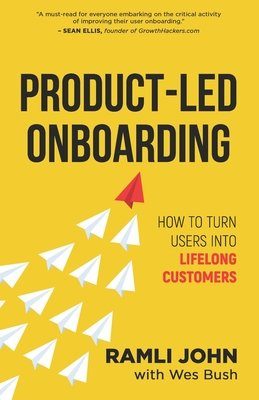
Review
A whole book about onboarding, which sounds excessive until you consider how much product effort goes into acquiring users who then leave in the first session.
The argument that landed for me is that onboarding is not a tour of the interface, it is the shortest possible path to the user achieving something real. Most onboarding is designed by people who already understand the product and therefore explains features, when the new user needs an outcome. Once you hold that distinction, a lot of onboarding flows look obviously wrong, including several I've shipped.
The practical core is working backwards from the moment a user first gets value, identifying every step between signup and that moment, and then deleting as many as possible. The specific advice to defer anything not required to reach that point, including profile setup and settings, is simple and more effective than it sounds.
The book is padded. The framework is stretched across more chapters than it needs and the acronym does a lot of structural work it hasn't earned. The first half contains the argument. The second half is examples. Read accordingly, and it will still be one of the higher-return short books on this shelf if you own a signup flow.
Key Takeaways
The parts worth keeping:
Onboarding delivers an outcome, not a tour
- A new user needs to achieve something real, not to be shown where the buttons are. Feature tours are designed by people who already understand the product.
- The goal is the shortest path to a first genuine result, and everything else is an obstacle regardless of how useful it is later.
- People remember what they accomplished, not what they were told.
Work backwards from first value
| Step | The question |
|---|---|
| 1 | What is the first moment a user genuinely gets value? |
| 2 | What must be true for them to reach it? |
| 3 | What currently sits in the way? |
| 4 | Which of those can be deleted, deferred or done for them? |
- Almost everything in a typical signup flow fails step four. Profile fields, preferences and settings can nearly always wait.
Reduce the work you ask for
- Every field and decision before first value is a chance to lose someone. Ask for the minimum and fill in sensible defaults.
- Where setup is genuinely required, doing part of it for the user beats explaining it well.
- Empty states are onboarding. A blank screen with no obvious next action is where a lot of otherwise good products lose people.
Measure the path, not the total
- Instrument each step between signup and first value. Aggregate activation numbers tell you there is a problem and not where it is.
- Time to that first outcome is the number worth driving down, and it is usually measured in the wrong units or not at all.