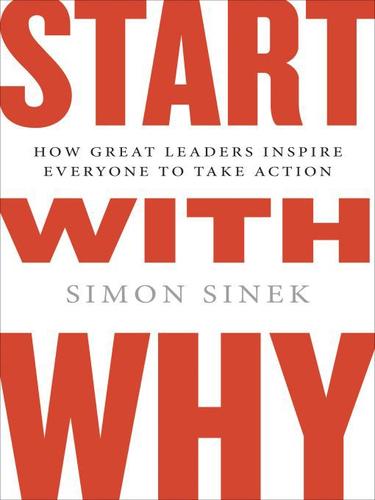
Review
One idea, extended to book length, and the idea is good enough that the extension is the problem rather than the premise.
The argument is that people respond to the reason something exists more than to its features, and that most organisations communicate in exactly the wrong order: what they make, then how it is different, and only occasionally why any of it matters. Reversing that order changes how the same information lands. As a communication principle it is sound and I have used it when framing product decisions.
Where it loses me is the certainty. The examples are chosen after the fact from companies that succeeded, and the same reasoning would explain their failure equally well had things gone differently. Apple appears constantly, and Apple is a poor teacher for almost every organisation because so much of its situation is unrepeatable. The neuroscience framing is also thinner than presented.
Read the first three chapters and you have the whole thing. The rest is more examples in support of a point already made. That said, the point is worth having, and the number of product teams who cannot articulate why their thing should exist suggests it hasn't spread as far as its popularity implies.
Key Takeaways
The parts worth keeping:
The order of the argument
- Most communication starts with what a thing is, moves to how it works, and reaches why it exists only if there's time.
- Reversing it, starting from the reason and letting the features follow as evidence, changes how the same information is received.
- People buy into the reason, not the specification. The specification is what they use to justify the decision afterwards.
Why it works on teams too
- People who understand the purpose make better decisions in situations you didn't anticipate, which is most situations.
- A team told only what to build will build exactly that, including when it's stopped being the right thing.
- Purpose is what lets you say no to work that is reasonable but off-course.
It has to be true
- A stated purpose that isn't reflected in decisions is worse than none, because it advertises the gap between words and behaviour.
- The test is not whether the statement is inspiring, it's whether anyone has ever declined something profitable because of it.
Read it critically
- The examples are selected from winners and explained backwards, which is the standard weakness of business books built on case studies.
- The core communication insight stands on its own without the supporting apparatus, and the first three chapters contain it.