Review
Product communities can be genuinely career-defining. The best ones create a place where practitioners get smarter together, build shared professional standards, and give people something to come back to. So this topic matters, and Wille has credibility on it. The execution, though, is thin. The book reads less like an argument or a practical guide and more like a collection of workshop prompts, many of which steer toward the author's consulting practice rather than toward something you can act on independently. No framework emerges from the material, and there is no clear position being built across chapters. I have been part of genuinely excellent product communities over my career, and reading this mostly reminded me how rare and valuable those are, rather than helping me understand what actually makes them work.
Key Takeaways
The parts worth keeping:
If you want to go fast, go alone. If you want to go far, go together.
What a Community of Practice is
A CoP (Community of Practice) is a recurring gathering of people who share a professional passion and want to develop their knowledge and skills together. The concept was first proposed by Jean Lave and Etienne Wenger in Situated Learning (1991) and later expanded in Wenger's Communities of Practice (1998).
CoPs serve specific functions inside a product organization:
- Share best practices and approaches to common domain challenges
- Filter and curate content for your company's specific context
- Define product culture and reinforce shared methodology
- Support personal development and help onboard new team members
- Provide a safe space to surface frustrations without putting them on the record
- Drive change by forming a single voice across disciplines
The Community of Practice Canvas
The book's main structural tool: twelve headings for designing a CoP from scratch.
- Purpose: what does the CoP want to achieve? (limit to three)
- Values: what matters to us as a community? (limit to three)
- Success Definition: how does the community define success?
- Roles: who is the community for, and what roles can members play?
- Rituals and Rhythm: which rituals deepen bonds among members?
- Content and Curation: what content creates value for the community?
- Workshops: which workshops will nurture the community?
- Shared Experiences: how to create shared experiences within the community?
- Practicalities: how do people join or leave, and what are the rules?
- Channels and Platform: what channels does the community use to communicate?
- Incentives: are contributions rewarded in some way?
- Financing and Sponsorship: what is the plan for financial sustainability?
Three phases to build one
Phase 1: Create the minimum viable community
- Real communities start with genuine connections between a handful of passionate people. Large, artificial communities tend to fail early
- Give the core group room to direct themselves. Autonomy sustains motivation better than management does
Phase 2: Give it structure
- Steer conversations from status updates toward what tools and approaches made people successful
- Create shared learning goals: find people with similar challenges, then agree on a format to tackle them together
- Start with one-off events before committing to standing rituals
- Leadership needs to signal clearly that spending time on the CoP is encouraged, not a nice-to-have
- Run community retros periodically. Four topics to cover: community purpose, success measures, rituals, and time investment
Phase 3: Formalize it
- At around 40 members with 3-4 active rituals, allocate official time and resources to community management
- Senior product people often enjoy the community management role. Find the natural allies and give them real support
Ritual formats and rhythm
| Informal | PechaKucha nights (20 slides, 20 seconds each) |
| Talking formats | In person; online; asynchronous (video, chat, whiteboard); broadcasting (newsletter, internal blog) |
| Talking rhythm | Daily: Slack channel. Weekly: 1:1 surprise lunch. Monthly: learning challenge, game night, onboarding session, themed learning. Quarterly: book clubs, training days, product academy. Annual: 2-day product summit |
| Cross-CoP sessions | With engineering, design, and other disciplines |
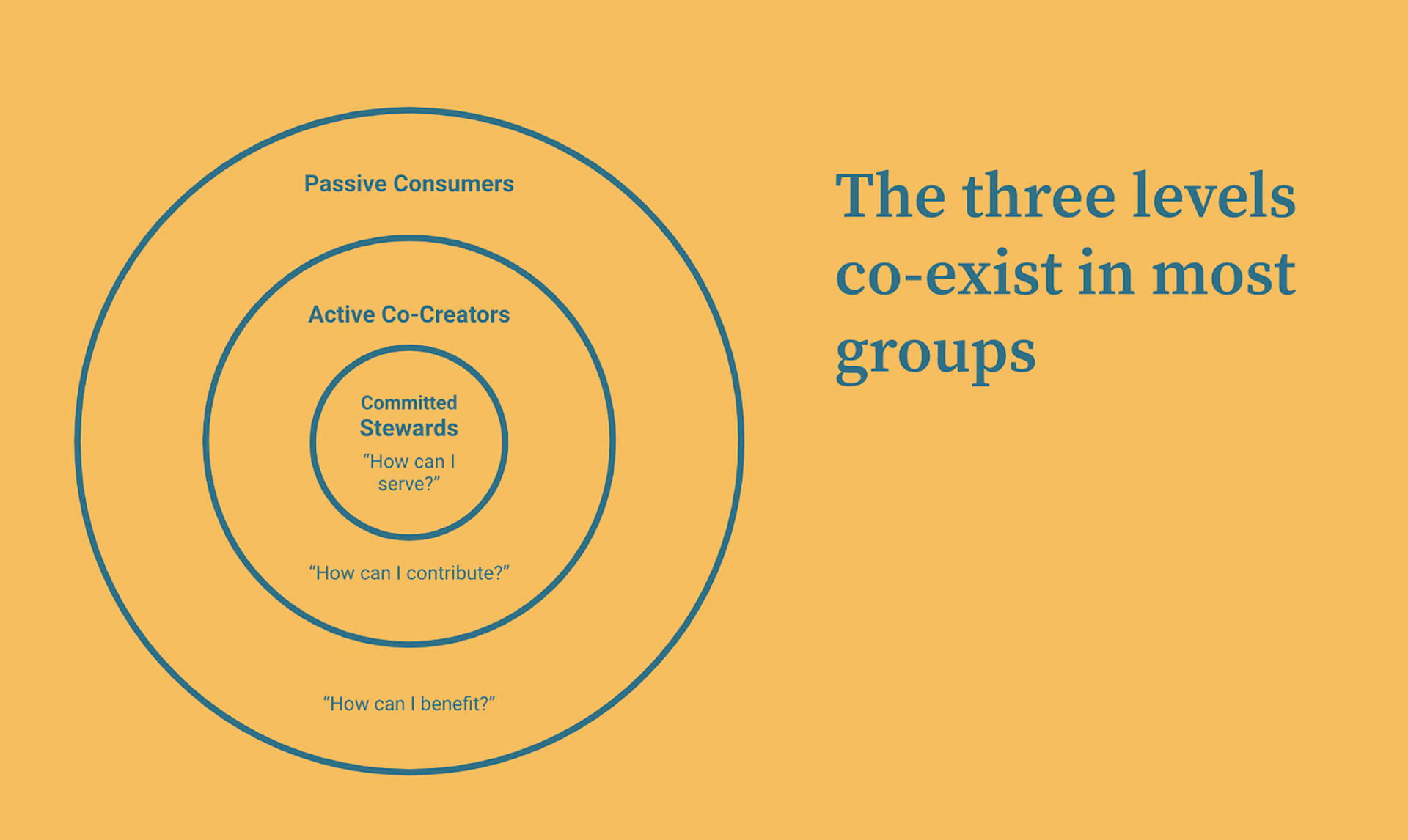
Three circles model (Michel Bachmann):
Running it day-to-day
- Active participation rates run around 10%. Plan for that; it is not a sign of failure
- Keep presentations low-stakes. High-stakes formats push people to stop contributing
- If participation drops, join forces with an overlapping CoP (UX, engineering) rather than pushing harder alone
- Do not schedule CoP sessions over existing standups
- Crowdsource what people are struggling with, then bring in content or speakers that address it directly
- Silent engagement counts. A post with no visible reactions can still be genuinely valuable to the members reading it
- A community without committed stewards collapses. Find those people early
- The smaller and more personal a community is, the less effort it takes to keep it alive. Resist the pressure to scale before the core is ready
- People generally want to contribute. They just need a low-friction way to start