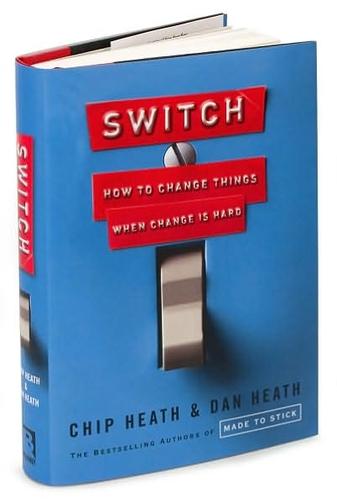
Review
A book about why change is hard and what to do about it, built on one metaphor that carries the whole thing and mostly deserves to.
The image is a rider on an elephant walking a path. The rider is deliberate reasoning, the elephant is emotion and habit, and the path is the surrounding environment. Change fails when you address only one of the three. Most organisational change attempts talk exclusively to the rider, with a deck full of reasons, and then treat the resulting inertia as resistance rather than as a predictable consequence of ignoring the other two.
The most practical idea is looking for bright spots: instead of analysing the problem, find the places where the thing is already working and ask what is different there. It's a much faster route to a solution than root cause analysis, and it has the advantage that the solution is already proven inside your own context.
The examples are drawn from a wide range and occasionally feel selected to fit. It's also firmly in the genre where a memorable framework carries an ordinary insight further than it strictly earns. Even so, it changed how I open change conversations, which is more than most books in the category manage.
Key Takeaways
The parts worth keeping:
Three things, not one
| Element | What it needs | Failure if ignored |
|---|---|---|
| The rider | Clear direction and specific next steps | Analysis paralysis, endless debate |
| The elephant | A reason to care, and early momentum | Everyone agrees and nothing happens |
| The path | An environment where the new way is easier | Good intentions defeated by friction |
- What looks like resistance is usually one of the three going unaddressed. It's far more often a path problem than a people problem.
Find what is already working
- Look for the places where the desired outcome is already occurring and study those, rather than analysing the failure at length.
- Solutions found this way are already proven in your context and already have people who can demonstrate them.
- Problem analysis is satisfying and frequently produces a diagnosis with no available treatment.
Be specific to the point of discomfort
- Vague direction gets interpreted differently by everyone and produces motion in several directions at once.
- Scripting the first few concrete actions removes the decision fatigue that stalls change before it starts.
Shrink it
- Make the first step small enough that it is not worth resisting, then let progress supply the motivation for the next one.
- Visible early wins matter more than their size, because they change what people believe is possible.