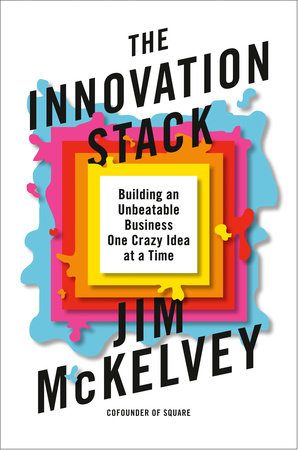
Review
McKelvey co-founded Square and wrote this partly to explain why Amazon tried to compete with them, failed, and withdrew, which is a genuinely interesting thing to want to explain.
His answer is the stack. When you solve a problem nobody has solved, each solution creates a new problem that also has no existing answer, and you end up with a pile of interlocking inventions built out of necessity rather than strategy. A competitor can copy any single element and cannot copy the pile, because the pieces only make sense together.
That reframing is the value. It's a more honest account of defensibility than most, because it says the moat was not designed. It accumulated while they were solving problems in order, and they only recognised the shape afterwards.
The book is loose. It wanders into the history of the Bessemer process and Bank of America's origins, entertaining but doing less work than the page count suggests, and the tone is chattier than the argument needs. There's also a survivorship problem he doesn't fully confront: plenty of companies built stacks of necessary inventions and died anyway. Read the first half for the idea, then skim.
Key Takeaways
The parts worth keeping:
Where a stack comes from
- Solving a genuinely unsolved problem forces you to solve the adjacent unsolved problems it creates, because nothing off the shelf fits.
- The result is a set of interlocking inventions built out of necessity, not from a strategy document.
- You usually only recognise it in hindsight. At the time it feels like a sequence of things going wrong.
Why it resists copying
- Any single element can be copied. The combination usually cannot, because each piece assumes the others.
- A competitor copying one part gets the part without the context that made it work, which is why partial copies underperform.
- An incumbent has to give up things that currently work in order to adopt the whole stack, and rarely will.
Serving people nobody serves
- The stack tends to form when you serve a group everyone else has written off as unprofitable or too difficult.
- Those customers force the invention, because the existing approaches genuinely do not work for them.
- Entering a market that is already well served produces competition on execution instead, where the incumbent has every advantage.
Read it with the failures in mind
- Plenty of companies assembled a stack of necessary inventions and still died. The book is told from the survivor's side and does not dwell on that.
- The framework explains outcomes better than it predicts them, which is worth holding in mind before applying it to your own situation.