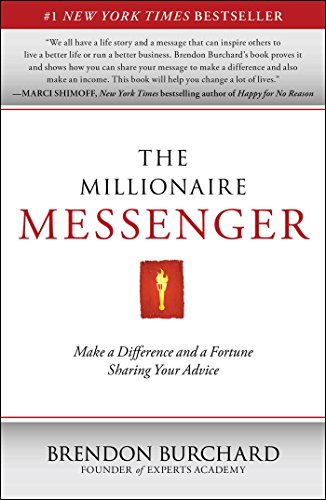
Review
I read this in June 2022, when I was first seriously thinking about whether I could build something worth paying for around what I knew. Burchard's core argument landed: most people undervalue their own expertise, and that expertise can be turned into products other people will buy.
The book's strongest contribution is the messenger framing itself. Results experts, research experts, role models. Pick a topic, pick an audience, understand what they're struggling with, and build something that moves them from A to B. That structure is sound. It held up when I built the Maven course and the paid workshop sessions.
What ages badly is the promotion playbook. The 8Cs of a sales message reads like a 2012 webinar script. The value-added campaign advice is fine in principle but the execution templates feel lifted from an email marketing course of that era. Burchard is describing tactics from a specific moment in internet marketing that has since moved on.
The deeper problem is density. The same ideas about giving away your best work and building an email list get restated across five chapters. If you trimmed the repetition, the useful content would fit in fifty pages.
Worth reading early in the journey, when you need permission to treat your expertise as a product. Skip the promotion chapter if you want current best practice.
Key Takeaways
The parts worth keeping:
Who counts as an expert
| Type | What qualifies you | Core move |
|---|---|---|
| Results Expert | You have done the thing and have the lessons to prove it. Others are behind you on the same path. | Teach what you have lived. Your accidental expertise is the product. |
| Research Expert | You have not done it, but you have studied it deeply and interviewed the people who have. | Interview top practitioners, synthesize their lessons, package the distillation. |
| Role Model | People follow and trust you because of who you are and what you stand for. | Share your perspective and approach. Authority builds through consistency. |
The product ladder
- Start with free content: articles, videos, posts. Give your best ideas away first. You will always generate more.
- Build a mailing list. List size correlates directly to income and influence. Still true.
- Ladder paid products from low to high: short course, online program, live workshop, coaching, high-ticket events.
- Create each level to serve the audience and to introduce the next level naturally.
The promotion sequence
Burchard's 8Cs of a sales message. Dated in its execution advice but structurally coherent:
| Element | What it does |
|---|---|
| Claim | A bold promise about what your product helps the buyer accomplish. |
| Challenge | Name the audience's real problem. Make them feel seen. |
| Commonality | Show you have been through it. Credibility requires shared experience. |
| Credibility | Evidence that you have reached the destination and helped others get there too. |
| Choice | Position your offer as the clearly differentiated option. |
| Comparison | Frame the price against the cost of not solving the problem. |
| Concern | Surface and dismantle the most common objections before they form. |
| Close | A clear call to action with stacked benefits, a guarantee, and a reason to act now. |
Principles that hold
- Pick one topic. Master it. Become known for it. Dabbling across topics is the failure mode.
- Understand your audience's ambitions, frustrations, and learning preferences before building anything.
- Give your best content away free. You will produce more, and it builds the trust that sells the paid product.
- Your origin story matters. What did you struggle with, overcome, and figure out? That is the connection.
- Student first, teacher second, servant always. Mastery requires staying a learner.