Review
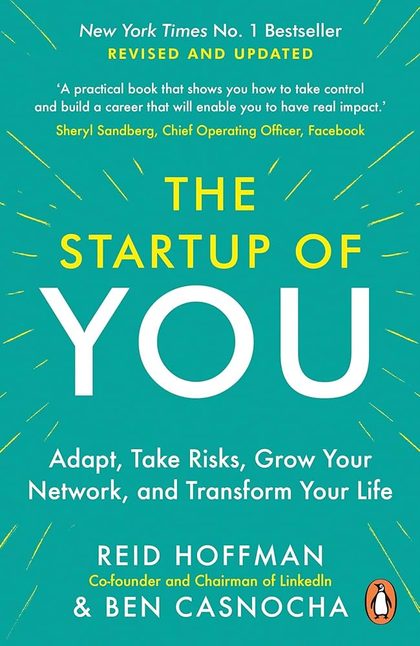
Hoffman built LinkedIn, then wrote a book arguing your career should operate like a startup. It could easily be self-serving. It isn't. The central frame, that your competitive advantage is the intersection of what you have, what you want, and what the market will actually pay for, is genuinely useful and harder to apply than it sounds. I read this in 2018 and the ABZ planning idea has come back to me more than once since. The book is over a decade old and the career market it describes has only gotten more accurate. Worth reading for the competitive advantage framework alone, even if the networking chapter overstays its welcome.
Key Takeaways
The parts worth keeping:
Competitive advantage: three inputs, one intersection
The book's most useful contribution is a clean model for figuring out where to focus.
| Dimension | What it means |
|---|---|
| Assets | What you currently have: skills, knowledge, credentials, network, capital |
| Aspirations and values | What you want to be doing; the direction that genuinely motivates you |
| Market realities | What the market will actually pay for; supply and demand for what you offer |
Your competitive advantage sits at the intersection of all three. Ignore any one and you get a plan that looks coherent on paper but doesn't survive contact with reality.
ABZ planning: hold the vision, iterate the route
- Plan A: what you're doing now. Keep learning, keep adapting. Which option offers the most learning potential is always the right question to ask.
- Plan B: the pivot to something adjacent if Plan A stops working. Start it on the side before you need it. Take a part-time internship, build a side practice, learn the skill during evenings and weekends.
- Plan Z: the safety net. The thing you can fall back on if everything else fails. Knowing it exists makes you bolder with Plans A and B.
Conventional career planning assumes you can accurately diagnose your passion upfront and that the market will cooperate. Neither assumption holds. The vision can stay stable; the plan to get there must stay flexible. Make reversible, small bets. Minimize the cost of failure. Keep your day job while you test the next thing.
Network intelligence
- Your network is how you update your read on all three competitive-advantage inputs. It tells you what the market actually wants, which opportunities are real, and which risks are worth taking.
- Build genuine relationships before you need them. Transactional networking poisons the well and people can tell.
- The best professional network is both cohesive (people who know each other and vouch for you) and diverse (people from different fields and circles who surface different opportunities).
- Serendipity isn't passive luck. The best way to make sure lucky things happen is to make sure a lot of things happen.