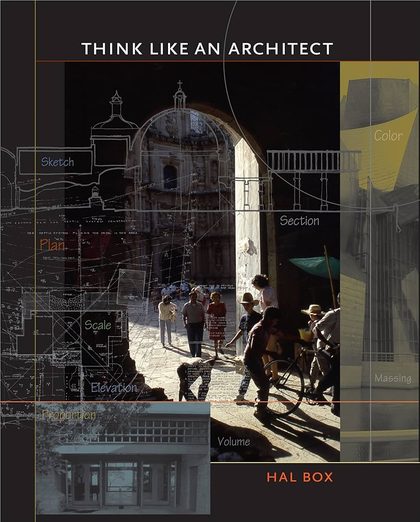
Review
There's a moment in this book where Hal Box describes how to actually observe a building, not just walk past it. I happened to be in Seville when I reached that section of the audiobook. A street I had walked many times before suddenly looked different: the proportions, the decisions embedded in the facade, the space between buildings. That kind of perceptual shift is what the book is really after. The parallels to product work are genuine. Architects design for people they will never meet, commit to decisions that outlive the brief, and still try to make something worth standing in front of. Recommend without hesitation.
Key Takeaways
The parts worth keeping
How architects see
- Most of the interesting work in a building is above eye level. Most people never look up.
- Architecture is the art of space. You can't fully appreciate it from a photo. You have to be in it; scale is part of the design.
- At the city scale, streets become corridors and parks become gardens. The vocabulary shifts but the design problems remain.
How architects work
- The pencil is the tool of choice. As much is erased as drawn.
- Draw to think. Build useful things from that thinking.
- Place each part of a project in a hierarchy early. Once you have something that works, start over and see if you can do better.
- Don't fall in love with your drawing too soon. Box puts it directly: "Architects are often too quick to form."
- Seek inspiration freely. Every designer is a borrower and a mimic; that's fine.
- A critique is a test of your design before you have committed to it. Use it.
- If after seven iterations you end up where you started, you have gained conviction.
- Always ask how much a change will cost. A surprising number are free.
Principles that carry over
- An architect works at the intersection of art, engineering, and business. A good product manager isn't far off.
- First, do no harm. Before adding anything, ask whether what you build is better than what it replaces. Most buildings are inherently ugly without deliberate care.
- Seek complexity. Avoid complication. They aren't the same thing.
- Once symmetry enters a composition, it demands to be continued.
On proportion
Box covers several ratios that architects use to create compositions that feel right:
| Ratio | Value | Notes |
|---|---|---|
| Golden ratio | 1 : 1.618 | Found in classical buildings and natural forms |
| Square root of 2 | 1 : 1.414 | Made by taking the diagonal of a square; used in ancient cultures |
| Square | 1 : 1 | Stable; can feel heavy at large scale |
| Double square | 1 : 2 | Softer and less overwhelming than a cube |