Review
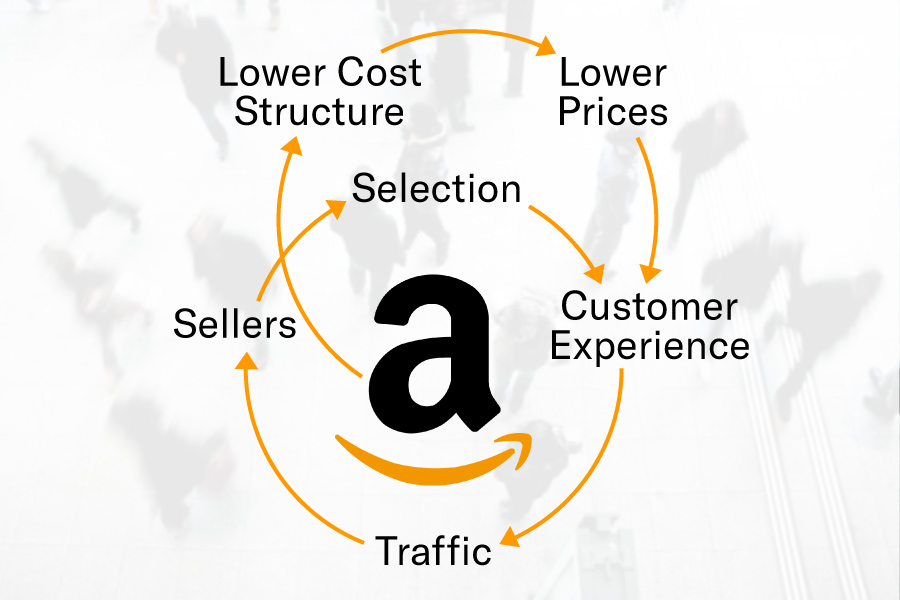
The Amazon flywheel diagram stopped me the first time I encountered it. Something about reducing a complex business to a closed loop, where each step is the cause of the next, felt like the right level of abstraction for strategy. Collins argues the flywheel is the most important idea in Good to Great, and this monograph earns its place by giving the concept room to breathe beyond a single chapter. I think he is right to separate it out. What strikes me most is how few organizations can actually name their flywheel. They have strategies, roadmaps, and OKRs, but not the underlying self-reinforcing loop that makes any of it compound. This book is short. Applying it properly is not.
Key Takeaways
The parts worth keeping
The Flywheel Concept
- Good-to-great transformations do not have a defining breakthrough moment. Progress accumulates quietly, one rotation at a time.
- The flywheel metaphor is precise: enormous effort for the first rotation, then persistent effort builds speed until the wheel moves with self-sustaining momentum.
- Each component must follow as a natural consequence of the one before it. The sequencing is not arbitrary. If you have to force the logic, the component does not belong there.
- The most common strategic error is abandoning the flywheel prematurely, chasing new initiatives before the current one has had time to compound.
Amazon's Flywheel
- Lower prices → more customer visits
- More visits → more 3rd party sellers (paying commission)
- More sellers → expand store and distribution (fixed costs spread further)
- Expand distribution → grow revenues per fixed cost (efficiency)
- Grow revenues per fixed cost → lower prices 🔁
Steps to Capturing Your Flywheel
- List your significant replicable successes
- List your failures and disappointments
- Compare them. What do they reveal about your flywheel components?
- Using those components, sketch the flywheel:
- Where does it start?
- What follows next, and why?
- How does the loop close?
- Do you have too many components? Is anything missing?
- What evidence confirms this works in practice?
- Limit to 6 components or fewer. Does the empirical record validate it?
- Test against your successes and disappointments. Adjust until the flywheel better explains both.
- Check it against the three circles of the hedgehog concept:
- What you are deeply passionate about
- What you can be best in the world at
- What drives your economic or resource engine
Sustaining the Flywheel
- Maintaining focus during difficult periods is the hardest part. The temptation to pivot or restart is strongest exactly when momentum most needs protecting.
- Intel moved from memory chips to microprocessors without abandoning its flywheel. The underlying loop transferred to the new product. The compounding did not stop.
- The big strategic asset is the flywheel itself, not any particular product line.
Five Stages of Decline
- Hubris born of success
- Undisciplined pursuit of more
- Denial of risk and peril
- Grasping for salvation
- Capitulation to irrelevance or death