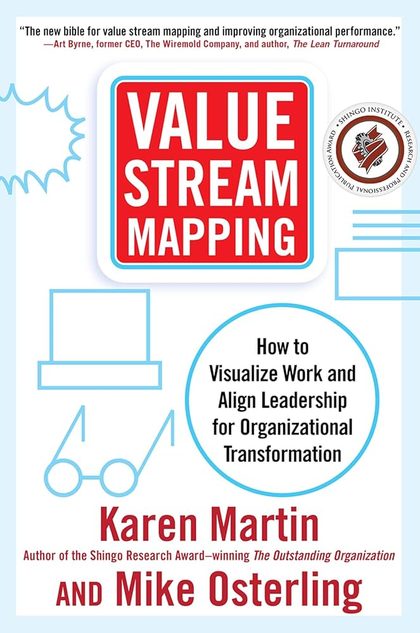
Review
Value stream mapping does one thing and does it well: it gives you a repeatable way to see where work actually gets stuck. I picked this up wanting a lean-adjacent tool I could use without dragging a team through a semester of lean theory first, and that is exactly what it delivers.
The three-phase structure, prepare, map, transform, keeps the exercise from turning into an open-ended workshop with no output at the end of it. It is deliberately light on jargon, which makes it easy to hand to a team that has never done this before.
My one caveat: this is an introduction, not a deep dive. If you already know lean methodology, you will find little new here. If you don't, it's a clean way in.
Key Takeaways
The parts worth keeping:
- Value stream mapping is a team-based, visual way to see how work actually flows end to end, connecting every function back to the customer so you can spot disconnects, redundancies, and gaps.
- Mapping the current state means walking the value stream with your team, talking to the people actually doing the work, and capturing real metrics at each step: process time, lead time, percent complete and accurate.
- Designing the future state is about cutting unnecessary tasks and handoffs, not adding process for its own sake. Use lean tools like parallel processing and task combining to create flow, and a PACE chart to prioritize ideas by ease of execution against expected benefit.
- A successful transformation needs a named value stream champion, a plan with measurable targets and concrete countermeasures, and regular reviews to keep it honest.
- Run this as a Plan-Do-Study-Adjust loop rather than a one-time event: appoint someone to keep monitoring performance, and revisit each key value stream at least once a year.
The three phases
| Preparation (~4 weeks) | Develop a charter, secure leadership support, form the team, collect the data |
| Mapping (~3 days) | Understand the current state, design the future state, draft the transformation plan |
| Transformation (ongoing) | Execute the changes: Just-Do-Its, Kaizen events, or full projects, depending on what the improvement needs |