Review
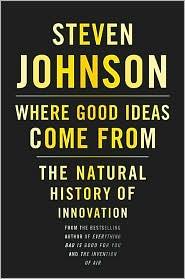
This isn't a product book and I'd stop reading it as one. It's a history of where innovation actually comes from, and its main service is demolishing the story we tell about lone geniuses having sudden insights.
The idea I kept is that innovation moves one step at a time into whatever is newly possible. You cannot invent the thing that is four steps away, however clever you are, because the components do not exist yet. What looks like a leap in hindsight was a short step taken from a position most people had not reached.
The other durable point is about time. Johnson makes the case that important ideas usually arrive slowly, as half-formed hunches that sit around for years until they collide with something else. That's an uncomfortable argument for anyone running a two-day ideation workshop and expecting a breakthrough at the end of it.
The weakness is that it explains rather than instructs. You finish it with a better model of innovation and no clearer idea what to do on Monday morning. I'd still recommend it, but read it for the reframe, not for a method.
Key Takeaways
The parts worth keeping:
Innovation is a step, not a leap
- New things get built from the parts that already exist. Each invention makes a new set of inventions possible, and none of the ones beyond that set are available yet, no matter how smart the person is.
- This explains why the same discovery repeatedly happens in several places at once. The step became available, and several people were standing close enough to take it.
- For product work, the practical read is that the interesting question is not what should exist, but what has just become possible that was not possible last year.
Ideas need other people's ideas
- Environments where partial ideas circulate freely produce more good ones than environments where work happens in isolation and only finished thinking is shared.
- Protecting ideas too early starves them. The half-formed version needs to meet other half-formed versions to become anything.
- The implication for teams is uncomfortable: the meeting where people share unfinished thinking is doing more work than the review where they present conclusions.
Good ideas are slow
- Many important insights start as a vague sense that something is interesting, and stay that way for years before completing. They are not lost, they are incubating.
- This is a poor fit for how companies schedule innovation. A hunch that needs three years does not survive a quarterly planning cycle.
- Keeping a written record of half-formed observations is the practical response. It lets a hunch outlive the mood you had when you noticed it.
Error and repurposing
- Being wrong is productive when it forces you out of the assumption you did not know you were making. A process tuned to eliminate all error also eliminates that.
- Plenty of breakthroughs are existing things used for a purpose nobody intended. The original designer's intent is not the limit of what a thing is for.