Review
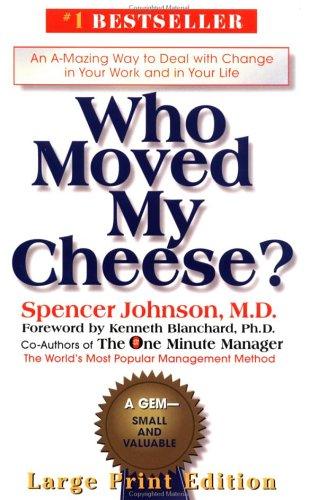
A parable about mice and small people in a maze, dealing with the fact that their cheese has moved. It takes under an hour to read and I have complicated feelings about it.
The core observation is fair enough: circumstances change, clinging to how things were is costly, and the anticipation of change is easier to act on than the shock of it. Written as a short fable it's memorable in a way a chapter of analysis would not be, and that's clearly deliberate.
What I object to is the context this book usually appears in. It's handed out by organisations during restructures, and in that setting the message becomes an instruction to accept a decision made elsewhere without complaint. The parable has nothing to say about whether the cheese was moved for a good reason, or by whom, and that omission does a lot of quiet work.
Read as a personal reminder that adaptation beats nostalgia, it's fine and mercifully short. Read as management literature, it's a way of framing organisational change so that objecting to it looks like a character flaw. Know which version you are being given.
Key Takeaways
The parts worth keeping:
The actual argument
- Conditions change whether or not you are ready, and the cost of pretending otherwise compounds while you wait.
- Watching for small early signs is far cheaper than reacting to the moment everything has already changed.
- Most of the difficulty is fear rather than logistics. People usually know what to do before they're willing to do it.
The four responses
| Response | What it costs |
|---|---|
| Notice early and move | Least, and it feels premature at the time |
| Move once it is undeniable | Some lost ground, recoverable |
| Wait for things to revert | Time, and the options that were available earlier |
| Insist it is unfair | Everything, while being correct about the unfairness |
What it deliberately leaves out
- The parable never asks who moved the cheese or whether they should have. In a workplace that omission is the entire point of handing it out.
- Adaptation and acceptance are not the same thing. The book quietly treats them as identical.
- Sometimes the right response to a change is to object to it, and this framing has no room for that.
How to use it
- Useful as a personal nudge when you notice yourself waiting for a situation to go back to how it was.
- Treat its appearance in a corporate setting as information about the sender rather than advice for you.